Color Block: Combo Blast
IvyPuzzle
4.31.41K Reviews
- Version
- 5.9.0
- Installs
- 50.00M
- Age Rating
- Everyone
Screenshots
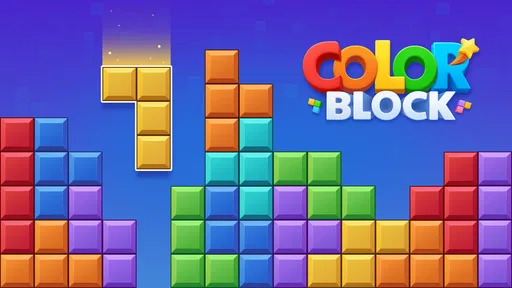
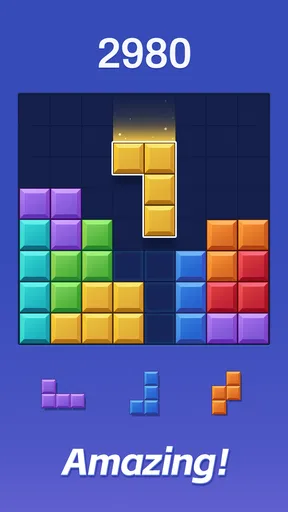
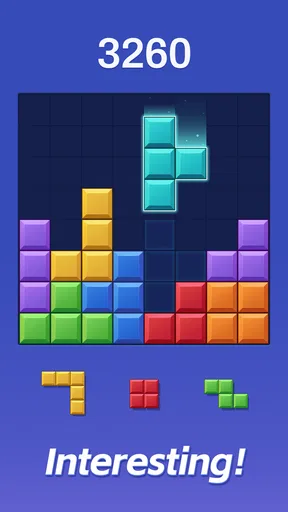
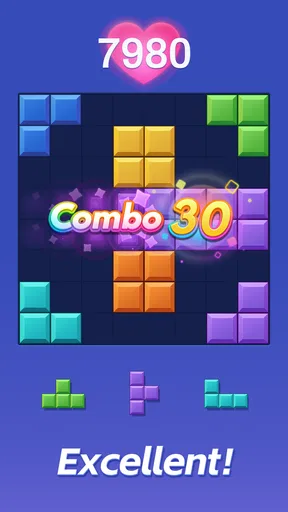
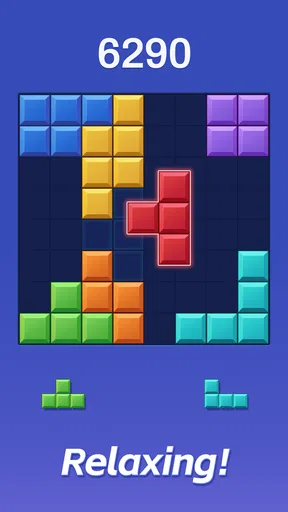
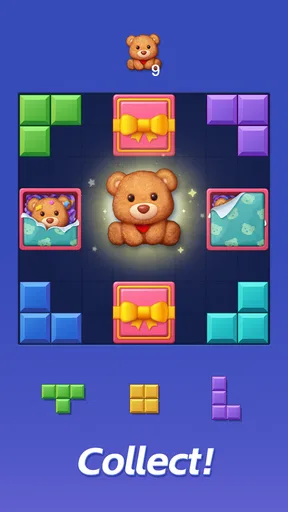
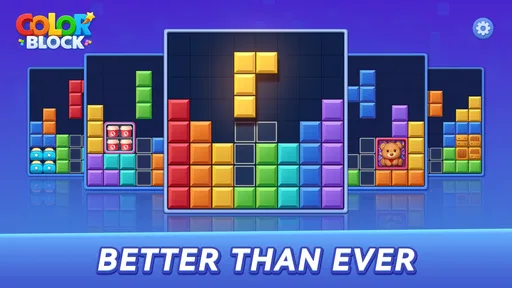
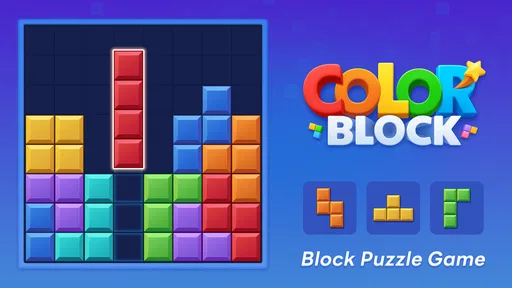
Our Review of Color Block: Combo Blast
 Analysis by Appyee
I spent time with Color Block: Combo Blast as a quick, repeatable puzzle game rather than as something I would play for a long uninterrupted session. Its appeal is immediate: the board presents a familiar block-arranging challenge, and the basic objective is easy to understand before the first round has properly settled in. That simplicity is the reason it works so well for short breaks, although it also means the experience depends heavily on how much satisfaction you get from refining decisions inside a very focused ruleset.
This is a free puzzle game from Ivy, available for players rated Everyone. It has built a large audience, with more than 50 million installs and an average rating of 4.5 from roughly 60 thousand ratings. Those figures do not replace personal experience, but they do fit what I noticed: the game is easy to approach, requires little explanation, and can be picked up by a wide range of players without demanding a complicated tutorial or a large time commitment.
How the first goals create a useful rhythm
The opening appeal comes from the contrast between simple pieces and increasingly careful placement. You are not learning a long list of controls or mastering a story campaign. Instead, the early goal is to understand how each block affects the remaining space and how a move that looks helpful now can make the next few turns awkward. I found that this gave the first sessions a pleasant sense of discovery without making the game feel inaccessible.
That early learning is especially effective when I treated every placement as part of a larger board rather than as an isolated chance to clear space. A beginner can focus on making obvious matches and keeping the board tidy. After a few rounds, I naturally started looking for combinations that would create more room and preserve flexible gaps. The game therefore has a gentle second layer: the controls stay simple, but the consequences of careless choices become easier to recognize.
One practical tip is to avoid filling the board from one side just because that area appears convenient. Leaving varied spaces gives later pieces more possible homes, while a wall of mismatched blocks can restrict the next move quickly. I also found it useful to pause before placing a piece instead of reacting to the first open area I saw. That small habit makes the game feel more deliberate and reduces the sense that a poor result was caused by bad luck alone.
The early objectives are not presented as a dramatic adventure, and that is important when deciding whether this game suits you. If you want characters, narrative rewards, or a large world to explore, this is not trying to fill that role. Its motivation comes from improving a board, extending a run, and finding a cleaner solution than the one that ended the previous attempt.
What progress feels like during ordinary play
Progress in a minimalist block puzzle is easy to misunderstand. There may not be a traditional campaign structure pulling me from one location to another, so the strongest progress signal is personal: I begin to recognize dangerous board shapes earlier, plan around awkward pieces, and make fewer desperate placements near the end of a round. That kind of improvement is quiet, but it is also durable because it comes from learning the puzzle rather than simply unlocking a stronger tool.
Combo-focused play adds another layer to that feeling. A basic clear can rescue a crowded board, but setting up a sequence requires patience. I had to decide whether to take an immediate safe move or preserve a space for a more rewarding chain. The best moments came when a board that looked nearly finished still had a recovery route because I had resisted the temptation to use every open area too quickly.
For a realistic everyday use case, I can see this fitting neatly into a commute, a waiting room, or the few minutes before going to sleep. I would play one round while waiting for an appointment, stop when the board reached a natural conclusion, and return later without needing to remember a plot or rebuild a complicated strategy. That convenience is one of the game’s clearest strengths, especially for people who prefer brief mental exercises over long sessions.
The trade-off is that the game’s progress can feel less tangible if you need explicit milestones. A player who measures enjoyment through new characters, equipment, maps, or story scenes may find the loop too narrow. Here, the satisfaction is closer to solving a small spatial problem repeatedly and gradually becoming more efficient. I consider that a strength for puzzle purists, but a limitation for anyone looking for a broader progression system.
Reading the difficulty curve instead of chasing every move
The challenge develops through decision pressure rather than through complicated controls. At first, it is enough to spot a good-looking placement. Later, the board asks me to think about what that placement prevents. This makes the difficulty curve feel natural: the rules remain approachable, while the player’s responsibility increases because empty space becomes more valuable and mistakes become harder to repair.
I recommend judging a move by the number of future options it preserves, not only by whether it creates an immediate clear. A large open region can be more valuable than a quick small combination if the next pieces are difficult to fit. Conversely, waiting too long for a perfect setup can leave the board dangerously crowded. The useful skill is balancing immediate relief with future flexibility.
Another non-obvious adjustment is to treat the edges and corners as resources rather than automatic storage areas. They can help organize the board, but they can also trap shapes that need room to be repositioned mentally before placement. I became more consistent when I kept at least one broad central route open and used tighter spaces only when I already knew which kind of piece could fit there.
Players who dislike failure should know that this style of puzzle can become tense near the end of a run. A single placement may not look disastrous until several turns later, when it blocks the only practical route for a larger shape. I did not see that as unfair; it is the main source of challenge. Still, people wanting a relaxed, consequence-free pastime may prefer a simpler matching game with more frequent recovery opportunities.
On the other hand, players who enjoy optimization may find the challenge satisfying precisely because the rules are so readable. There is room to improve without needing specialist knowledge. I could explain the basic idea to someone immediately, yet still make noticeably better or worse choices depending on how carefully I managed the board.
Where the retention loop works and where it can press too hard
The game encourages return visits through the natural “one more attempt” feeling that comes after a near miss. When a run ends because the board became cramped, I usually understood what I wanted to change next time. That clarity matters: replaying feels purposeful when I can identify a different opening, a more patient setup, or a better response to an awkward piece.
There is also a useful distinction between playing for survival and playing for combos. Survival asks me to protect space and avoid dead ends. Combo hunting asks me to accept short-term risk for a more satisfying sequence. Switching between those approaches keeps the basic board from feeling completely static, even though the underlying puzzle remains focused.
However, the retention pressure is not equally appealing to everyone. Repeated attempts can become routine if you are satisfied once you have understood the best general habits. The game does not appear designed to replace a deep strategy title or a constantly changing competitive experience. I would recommend it to someone who likes compact challenges, but I would skip it if I know I need substantial variety to stay engaged.
The free entry point makes trying it straightforward, while optional in-app purchases are listed at $4.99 per item. I would approach those purchases carefully and decide first whether the core loop itself is enjoyable. Spending money cannot fix a mismatch between the game’s compact puzzle format and a player’s desire for narrative, exploration, or a more elaborate reward structure. For me, the sensible approach is to treat the free experience as the test and view any purchase as optional rather than necessary for understanding the game.
Because the age rating is Everyone, it is also an approachable choice for households looking for a simple puzzle game that does not depend on mature themes. That does not mean every player will enjoy it equally. Younger or casual players may appreciate the direct rules, while experienced puzzle fans may eventually want more complexity than the compact format provides.
How it compares with familiar block-puzzle alternatives
Compared with a traditional falling-block game, this experience feels more reflective because the pieces do not create the same immediate downward rush. I have more time to inspect the board and consider the consequences of a placement. That makes it better for relaxed, turn-by-turn thinking, while a falling-block alternative is usually the stronger choice for players who want speed, reflexes, and escalating real-time pressure.
Compared with match-three games, the appeal is more spatial than color-pattern driven. I am not mainly scanning for identical symbols or swapping neighboring items; I am managing shape, orientation, and available room. Someone who enjoys planning a layout may prefer this approach, while a player who wants frequent visual effects and rapid chain reactions may find a match-three game more immediately exciting.
It also differs from larger logic games that build toward elaborate puzzles or story-based chapters. Color Block keeps its focus on repeatable board decisions, which makes it easier to play in small gaps during the day. The price of that convenience is a narrower sense of destination. There is no need to remember a complex system, but there may also be less reason to continue once the central routine stops feeling fresh.
Version details and practical expectations
The current version is 5.6.7, and the game supports devices running Android 7.0 or later. That makes it a practical option for people using older compatible Android hardware, provided the device meets that operating-system requirement. I would still leave some storage and system resources available for a comfortable experience, as I would with any mobile game, but the important point is that the listed minimum is not restricted to only recent Android releases.
Since the game is free to start, the decision to install it is relatively low risk. The main question is not whether the basic concept is understandable; it is whether repeating that concept matches your preferred kind of downtime. I would suggest giving it a few sessions rather than judging it after a single lucky or unlucky board. The appeal becomes clearer once you notice whether you are making intentional improvements or simply repeating the same placements.
One useful personal test is to play without chasing a high result at first. Focus on keeping several options open and observe how long the board remains healthy. After that, try deliberately setting up a combo and see whether the added risk feels rewarding. If both approaches are enjoyable, the game has a good chance of holding your attention. If neither produces satisfaction, more attempts are unlikely to change the basic character of the experience.
My verdict on its long-term progression
My overall view is positive, with a clear qualification. This is a well-suited puzzle game for short sessions, quiet concentration, and players who enjoy improving through better spatial judgment. The early goals are understandable, the progress signals come from genuine skill growth, and the difficulty becomes more interesting as the board demands greater foresight. Ivy has kept the central idea accessible enough for casual play without removing the possibility of thoughtful decisions.
Its limitations are just as clear. The progression is primarily about replay value and personal improvement, not a broad sequence of unlocks or a story that continually changes the context. Players who need a strong sense of external advancement may lose interest, and those who prefer fast action may find the measured placement style too restrained. I would also avoid treating the optional $4.99 purchases as a reason to continue if the basic loop does not already work for you.
For me, the best way to approach it is as a dependable pocket puzzle: open it when I want a focused break, protect the board rather than rushing for every combo, and use each failed run to identify one decision to improve. Its progression succeeds when you enjoy mastering small choices, not when you expect a large game world to keep unfolding. With its free price, Everyone rating, broad install base, and straightforward block challenge, it is an easy recommendation for casual puzzle players. I would simply choose a different genre if my priority were narrative, constant novelty, or high-speed competition.
Privacy and Permissions
See what permissions an app requests and how it handles your data.
- Wi-Fi connection information
- view Wi-Fi connections
- Other
- view network connections, full network access, control vibration, prevent device from sleeping, Google Play license check, read Google service configuration
Verdict
Strengths of Color Block: Combo Blast
- Simple color-matching rules make it easy to start playing.
- Short levels fit well into quick breaks or casual sessions.
- Combo effects add satisfying visual feedback to successful moves.
- Gradually harder puzzles provide a steady sense of progression.
- Playable offline, making it convenient without a data connection.
Limitations of Color Block: Combo Blast
- Frequent ads may interrupt the game, especially between levels.
- Some stages can feel repetitive after extended play sessions.
- Later puzzles may depend more on luck than careful planning.
- Extra moves and power-ups can encourage in-app purchases.
- The bright effects may feel distracting during longer sessions.
Other Releases by Ivy
View All
Subway Princess Runner
Arcade4.4

Bubble Shooter - Pop Bubbles
Casual4.6

Bubble Shooter
Casual4.5

Cat Runner: Decorate Home
Role Playing4.4
Similar Picks in This Category
View All
Block Blast!
HungryStudio4.8

Braindom: Brain Games Test
Lahana Game Studio4.6

AMAZE!
CrazyLabs LTD4.6

Sudoku - Classic Sudoku Puzzle
Oakever Games4.7

Art Puzzle - Puzzle Games
Easybrain4.8

Amaze GO!
Oakever Games4.9
Frequently Asked Questions
What is Color Block: Combo Blast, and how is the gameplay structured?
Color Block: Combo Blast is a casual block-puzzle game focused on matching and clearing colored pieces from a grid. You place or combine blocks to create lines, groups, or special combinations, depending on the level’s objective. The controls are generally easy to understand, but later stages require careful planning, since a poorly placed block can limit your options and make it harder to complete the board.
Is Color Block: Combo Blast free to download and play?
The game can generally be downloaded and played without an upfront purchase, making it accessible to most users. However, free-to-play games commonly include optional advertisements, bonus rewards, extra moves, boosters, or in-app purchases. Before downloading, it is worth checking the current store listing for pricing details and reviewing the purchase settings on your device, especially if children may use the phone or tablet.
Does Color Block: Combo Blast require an internet connection?
Basic puzzle gameplay may be available without a constant internet connection, which is useful when traveling or playing in areas with weak reception. Nevertheless, some features can depend on online access, including advertisements, cloud synchronization, events, leaderboards, reward claims, and updates. Availability may also vary between versions, so you should not assume that every feature will work offline after installing the game.
Is Color Block: Combo Blast suitable for children and casual players?
The simple controls and colorful presentation make Color Block: Combo Blast approachable for casual players and older children. It does not require advanced gaming experience, and short levels can be convenient for quick sessions. Parents should still review the age rating, advertising content, and in-app purchase options shown in the app store. Puzzle difficulty may also increase over time, so younger players could occasionally need assistance.
What should I know about advertisements, purchases, and game progress?
As with many free puzzle games, Color Block: Combo Blast may use advertisements to support free access and may offer optional purchases for boosters, coins, extra attempts, or ad removal. These features are not always necessary to start playing, but they can affect the pace of progression. Check whether progress is linked to an account or cloud service, because uninstalling the app or changing devices could potentially remove locally stored data.
Play our best games!


